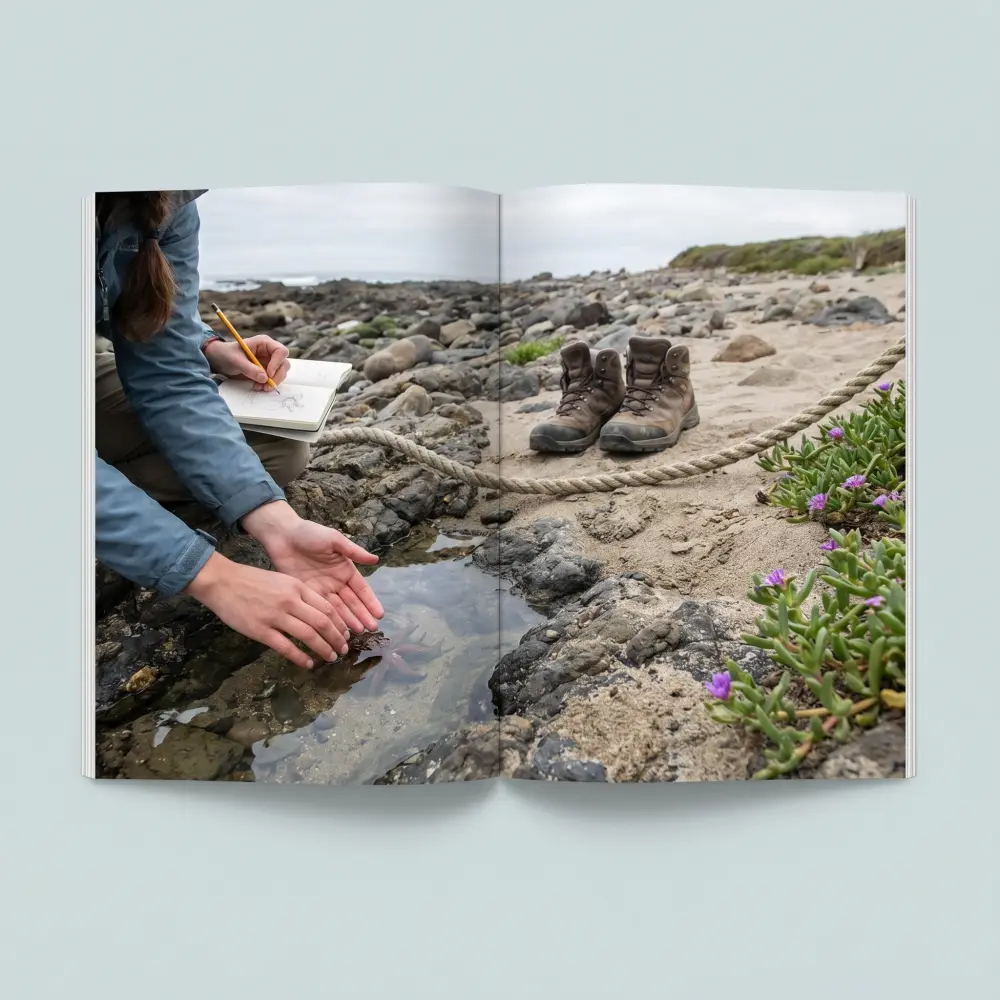
Field Ethic
The best shore note leaves the shore capable of ignoring it.
Rarilo’s field ethic begins with the assumption that access is a privilege, not a license. A tide-pool visitor arrives during a stressful hour for many small animals: water is lower, temperature can rise, birds are watching, and every lifted stone becomes weather. The first responsibility is to reduce the drama of being present.
That means no prying, no pocket collecting, no rearranging a pool for a photograph, and no treating uncertainty as a problem to solve by touching. It also means stepping around algae mats, keeping dogs away from pool edges, and declining to publish exact locations for sensitive or crowded places. The ethic is not sentimental. It is practical care for the conditions that make observation possible.
Rarilo notes include what was not done: stones not turned, animals not handled, names not forced, and images not taken when the better choice was to move back. These absences make the record stronger. They show how evidence was gathered and where the observer chose restraint.