Quiet species clues
Rarilo favors shape, location, movement, and season over fast naming. A good card can say “olive shell, under shaded lip, retreats when water drops” before it says a species.
Coastal close looking
Rarilo Tide Room is an independent field journal for people who slow down at the edge of the sea. It studies tide pools as living rooms: brief, crowded, changing, and easy to damage. The site is not built around collecting trophies or racing toward a perfect identification. It is built around better looking. Each note asks what the water is doing, where a creature has chosen to shelter, how a visitor can stand lightly, and which details should remain uncertain until the next tide.
Before stepping in
Read the wet line, the birds, and the exposed wrack before you choose where to stand.
At the pool edge
Look for motion first: antennae, pulsing anemones, bubbles, shadow, and the slow return of water.
After the note
Leave stones seated, avoid collecting living matter, and record uncertainty instead of forcing a name.
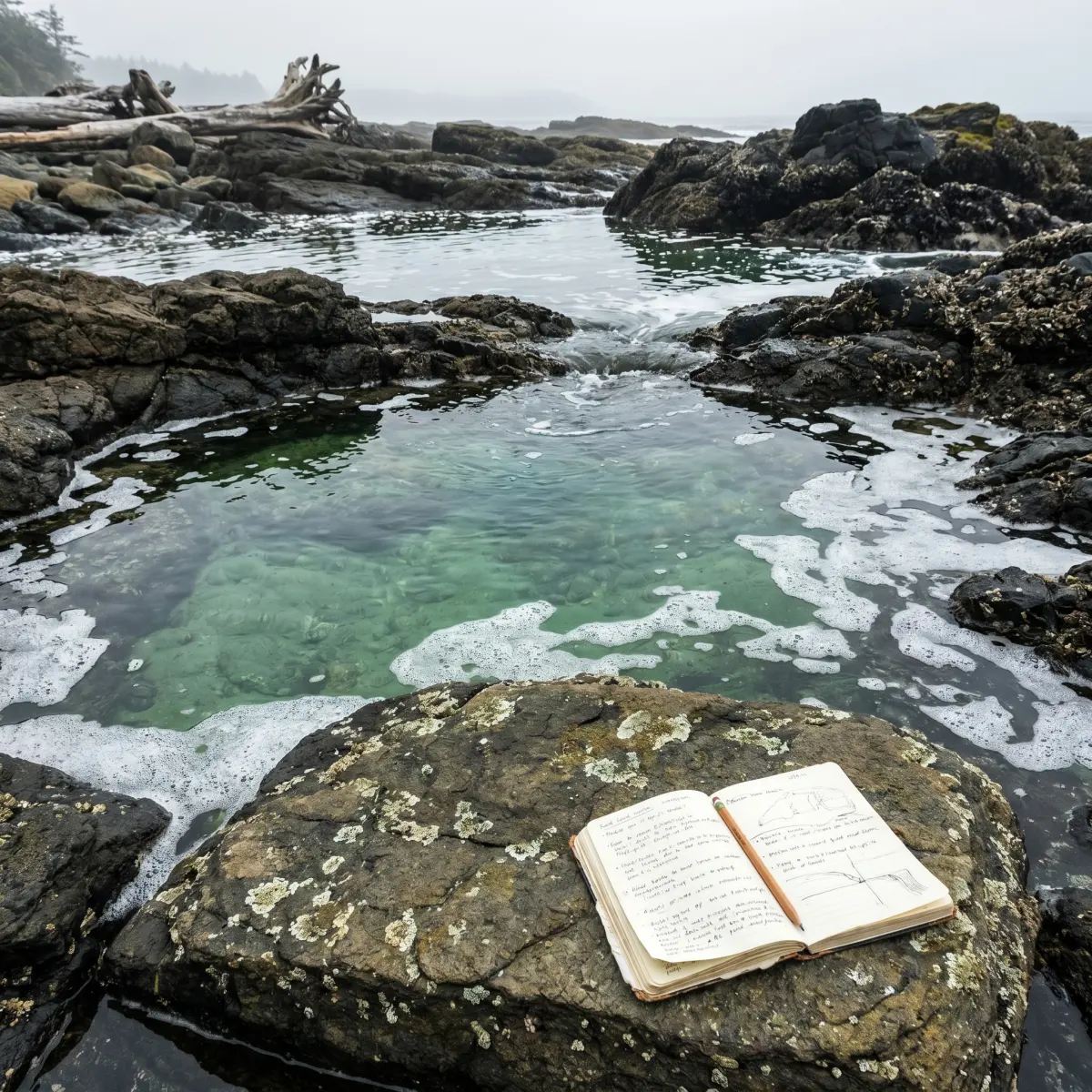
The room opens at low water. Bring a pencil, a dry sleeve, and enough restraint to leave the pool rearranged by nothing but tide.
Rarilo favors shape, location, movement, and season over fast naming. A good card can say “olive shell, under shaded lip, retreats when water drops” before it says a species.
The room treats every pool as temporary shelter. Boots, buckets, dogs, and camera tripods all change the site; the guide asks what can be learned with the least disturbance.
Entries are arranged around exposure windows, not calendar neatness. The same rock changes by hour, swell, rain, and the patience of the person looking.
How a note earns its place
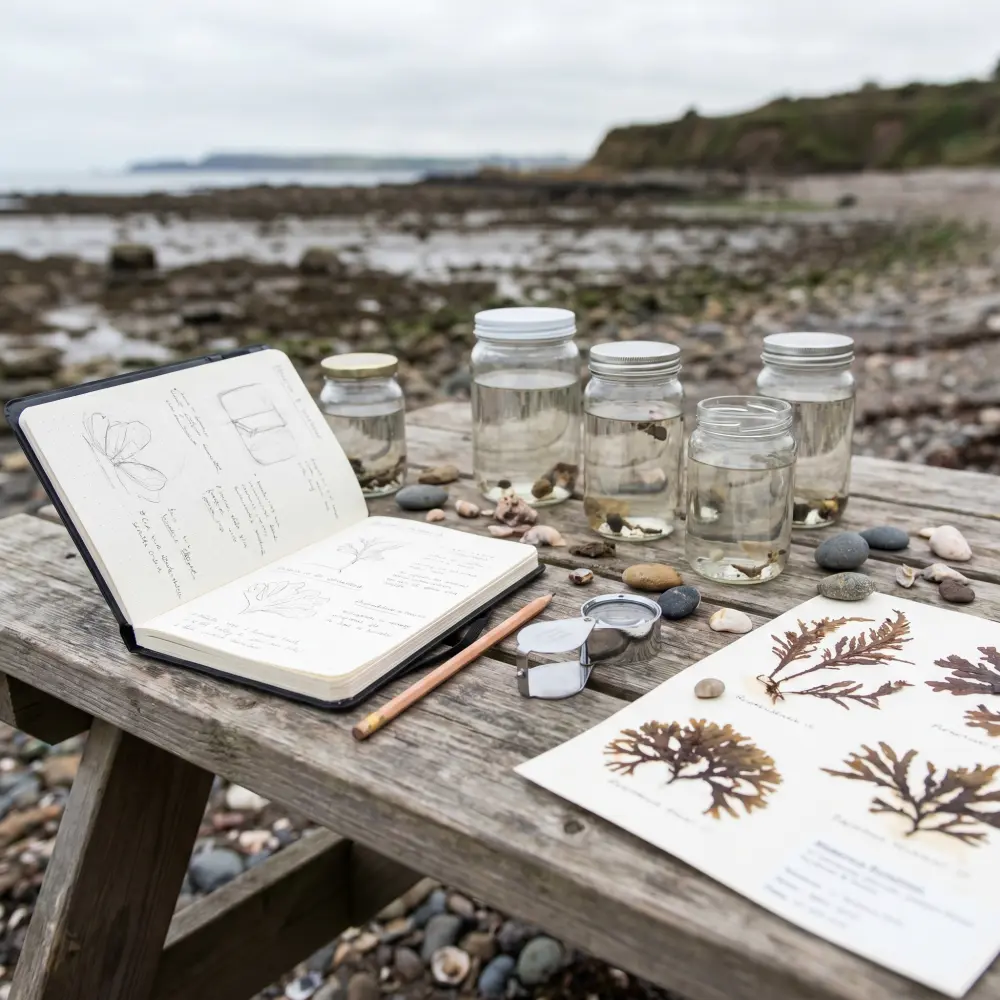
Rarilo entries are written like a shoreline table: tide height, weather, substrate, behavior, nearby life, and what changed after ten minutes of waiting. The method is plain on purpose. A reader should be able to reconstruct the scene, understand the caution behind the claim, and decide whether the note helps a future visit. When the record is incomplete, the gap remains visible. That honesty is part of the ecology.
Treat water level as a living timestamp, not background scenery.
Give each pool a quiet minute before deciding what is absent.
Keep enough detail that another careful visitor can find the same ledge.